UX
Web App
Enterprise
Lowcode
End-of-Life Management Platform
End-of-Life Management Platform
A centralized, low-code enterprise platform built to digitize and automate the End-of-Life (EOL) product management process for a global manufacturing client.
The platform connects suppliers and internal stakeholders through structured submission workflows, automated data validation, and real-time approval tracking, replacing a fragmented, email-heavy manual process that caused delays of up to 10 days.
A centralized, low-code enterprise platform built to digitize and automate the End-of-Life (EOL) product management process for a global manufacturing client.
The platform connects suppliers and internal stakeholders through structured submission workflows, automated data validation, and real-time approval tracking, replacing a fragmented, email-heavy manual process that caused delays of up to 10 days.
Role
Role
Product Designer
Product Designer
Timeline
Timeline
4 Months
4 Months
Year
Year
2025
2025
99%
99%
Reduction in
Processing Time
Reduction in
Processing Time
85%
85%
Reduction in
Manual Effort
Reduction in
Manual Effort
97%
97%
Loss of Data
Prevented
Problem
Fragmented workflows were stalling critical EOL decisions.
Fragmented workflows were stalling critical EOL decisions.
Suppliers submitted data over email and spreadsheets, internal teams chased approvals manually, and no one had a single view of case progress.
Suppliers submitted data over email and spreadsheets, internal teams chased approvals manually, and no one had a single view of case progress.
Solution
One platform. Structured from submission to approval.
One platform. Structured from submission to approval.
Suppliers submit through validated forms, data is checked automatically, and cases are routed to the right teams — with full visibility at every step.
Suppliers submit through validated forms, data is checked automatically, and cases are routed to the right teams — with full visibility at every step.
My Role
01
Led discovery workshops with suppliers, vendor managers, and internal ops stakeholders
02
Mapped the existing 8–10 day manual workflow end-to-end
03
Designed role-based dashboards for three personas: Supplier, Vendor Manager & Internal Ops
04
Designed within Appian's low-code constraints across all user roles
Input
Single Part EOL Submission
Suppliers fill a structured form with part details — the system validates data instantly, flags missing fields, and auto-notifies the vendor to begin review. No emails, no follow-ups.
Suppliers fill a structured form with part details — the system validates data instantly, flags missing fields, and auto-notifies the vendor to begin review. No emails, no follow-ups.
Automation
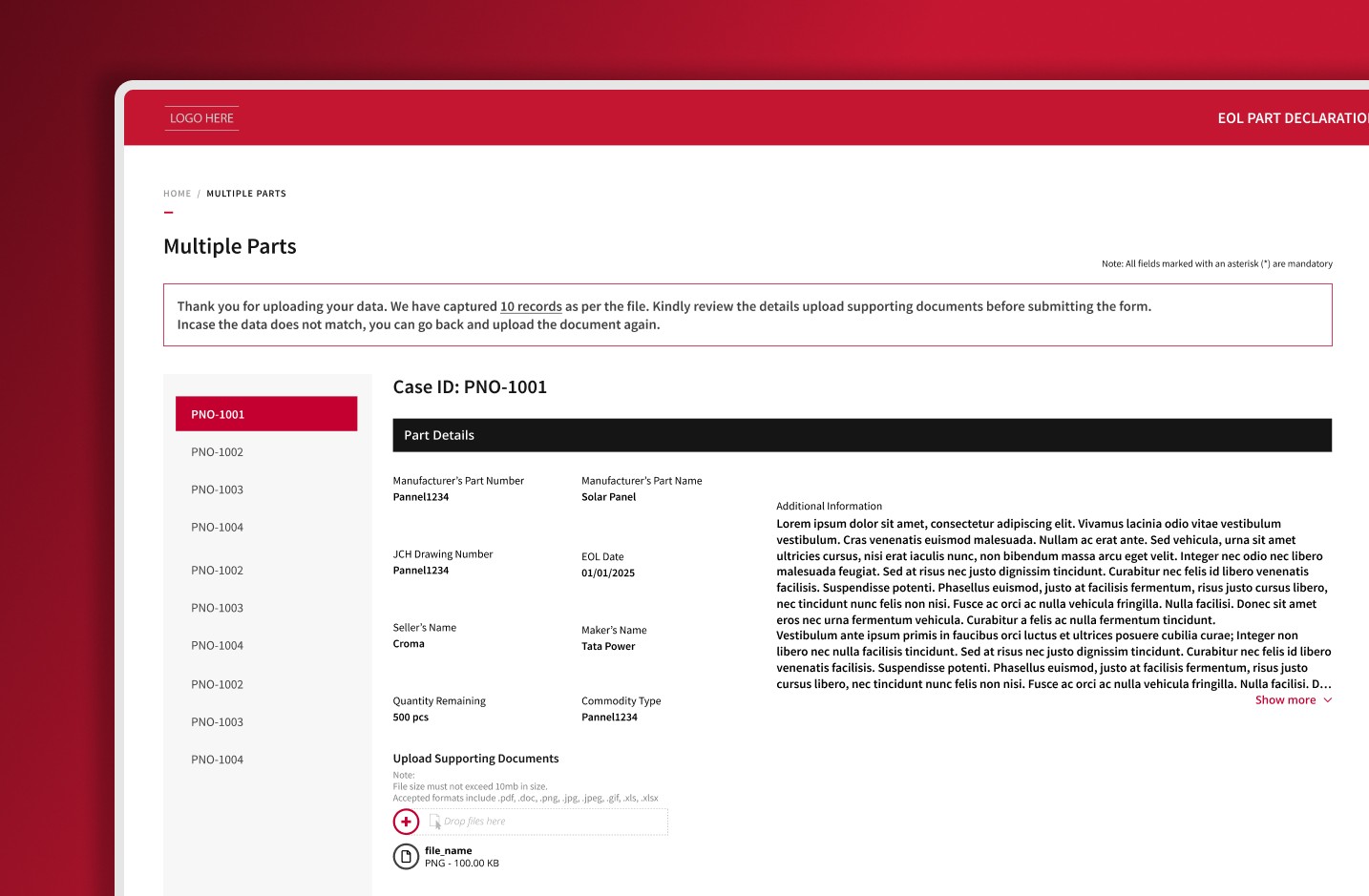
Bulk EOL Upload (Multiple Parts)
Suppliers upload a document containing multiple EOL parts — the system extracts and structures the data automatically, flags inconsistencies for correction, and routes clean records forward at scale.
Suppliers upload a document containing multiple EOL parts — the system extracts and structures the data automatically, flags inconsistencies for correction, and routes clean records forward at scale.
Dashboard
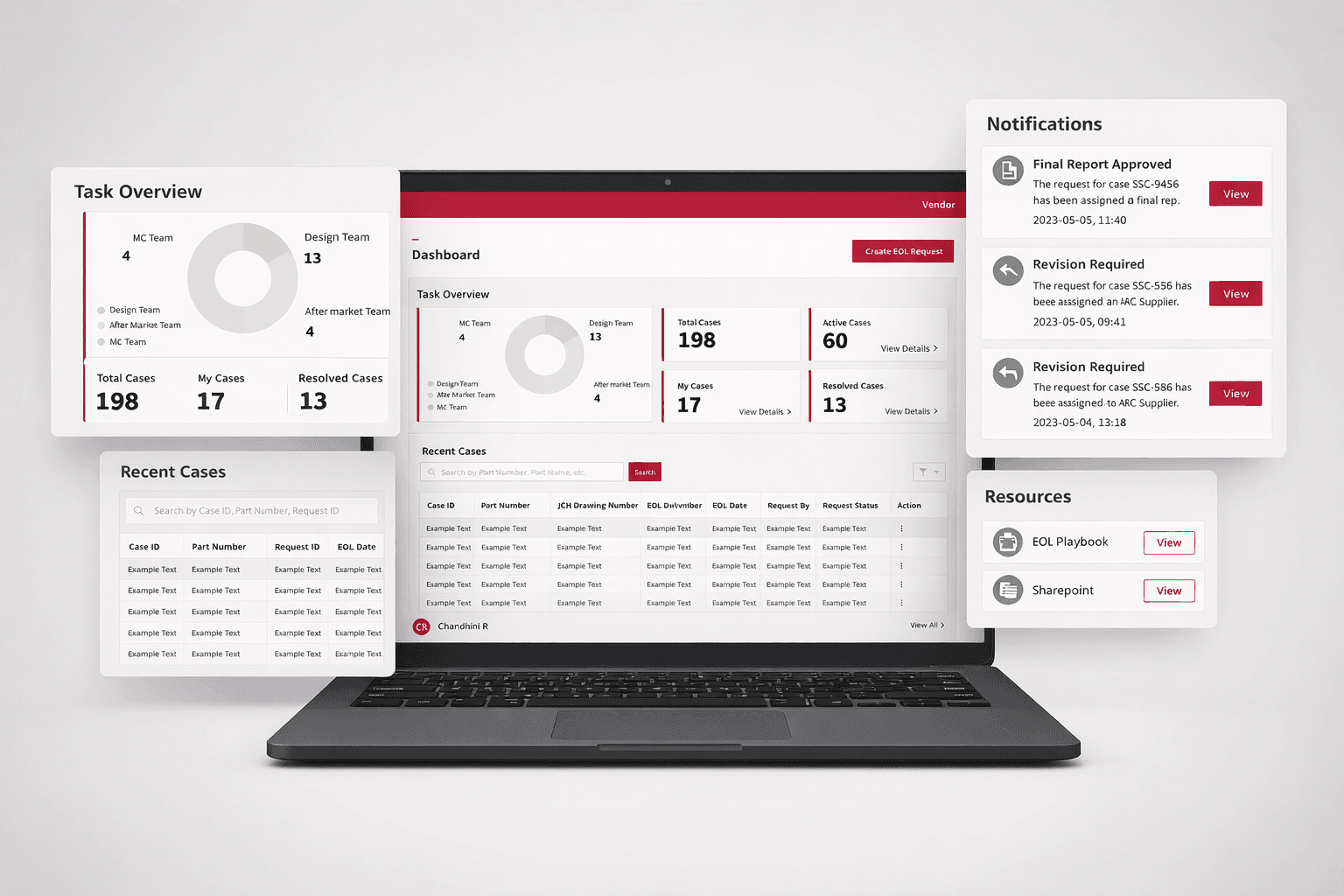
Vendor Dashboard & Case Validation
Vendors get a centralized view of all active cases — with status, task distribution, part details, and audit history surfaced in one place. Everything needed to validate and progress a case without chasing anyone.
Vendors get a centralized view of all active cases — with status, task distribution, part details, and audit history surfaced in one place. Everything needed to validate and progress a case without chasing anyone.
Workflow
Internal EOL Case Creation
Internal teams initiate EOL requests directly within the platform and assign them to the relevant plant — ensuring the process moves forward whether the request comes from a supplier or internally.
Internal teams initiate EOL requests directly within the platform and assign them to the relevant plant — ensuring the process moves forward whether the request comes from a supplier or internally.
UX Research & Analysis
User Flows
Design Decisions
Outcome
A 10 day back-and-forth became a same day decision.
A 10 day back-and-forth became a same day decision.
Suppliers submit structured, validated data from day one. Internal teams review with full context, approve with confidence, and never chase a status update again.
Suppliers submit structured, validated data from day one. Internal teams review with full context, approve with confidence, and never chase a status update again.


The screen is divided in 2 scrollable areas. Hover and scroll each one separately.